
There are always multiple ways to reach a goal. The same applies to the choice of means to an end. We supplement our diverse, methodological repertoire with several proven tools for which we have received specialized training and licensing. Each of these tools sheds light on a different aspect and serves as a starting point for in-depth reflection—whether in individual or group settings.
-
PCM®
Process Communication Model®.
Using the PCM® Profile Report, you not only learn about your communication and stress patterns, but also learn to assess those of your counterpart. The chance increases to adequately counteract miscommunication and to strengthen the relationship in the long term.
-
TMS®
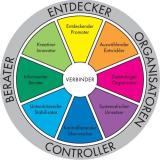
Team Management System®.
It makes the preferred type of activities and thus the preferred role of team members visible. Because not everyone has the same preferences and strengths. Each team member receives a TMS® Profile Report. For a team, this means becoming aware of the common potential and diversity and taking this into account in the assignment of tasks.
-
TPM®
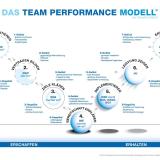
Team Performance Model®.
It supports a team in analyzing its development status. The TPM® Check-Up explores the 7 stages of the development process and jointly identifies solved and unresolved issues. Thus, the next measures and steps on the way to a higher performance of the team can be derived.
-
CAPTain:advanced
CAPTain:advanced is a potential analysis for in-depth and differentiated aptitude, potential and location determination.
Based on 183 pair comparison questions, the likely work- and performance-behavior shown is described. In addition, the self-image is recorded in 38 aspects. The possibility of this self-image and external image comparison offers excellent starting points in coaching and in the development of an understanding of leadership.
-
IDI®
Intercultural Development Inventory® .
It analyzes my approach, view and attitude towards other cultures. This is an important insight for companies as well as teams of different nationalities who want to develop in cooperation and mutual understanding.
-
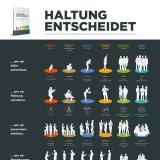
Mindset
The attitude determines whether we can develop from competition to cooperation to co-creation. It influences leadership behavior and ultimately the corporate culture. The model of attitudes according to M. Permantier offers a good reflection surface to explore personal attitudes and development. We use it as a reflection model in our coaching, because attitude decides behavior.